Best Blocking Mats and Boards for Knitting
Blocking mats and boards give finished knits their final shape by holding pieces in position while they dry or receive steam. A good set accepts pins firmly, resists steam heat without warping, and connects into a large enough surface for a full sweater back or shawl. We looked at interlocking foam sets and rigid wire blocking boards on thickness, grid accuracy, and how many pins are included.
FiberCroft may earn a commission from links below . Updated June 2026
The short answer
The KnitIQ Extra Thick Blocking Mats are the best blocking mat set for most knitters, with nine interlocking foam boards in a generous surface area, dual-sided centimeter and inch grids, and 150 T-pins included at a price that makes the complete kit accessible for beginners and experienced knitters alike.

Eucalan No-Rinse Wool Wash (Lavender)
A no-rinse, plant-derived wool wash concentrate that cleans, conditions, and softens natural fiber. A small amount per blocking soak keeps handknits fresh and supple.
- No-rinse formula means you simply squeeze and lay flat, no extra rinse step
- Conditions wool and natural fibers while cleaning, keeping handknits soft
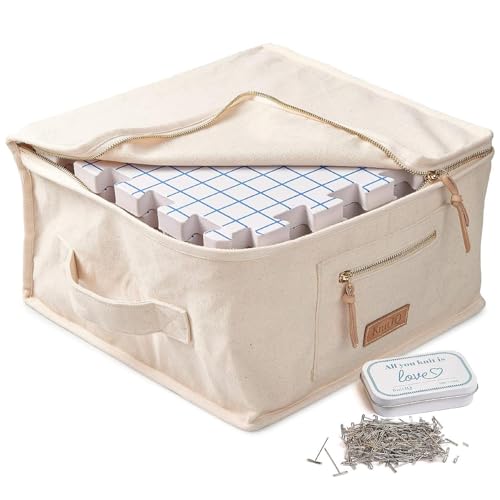
KnitIQ Extra Thick Blocking Mats (9-Pack with 150 T-Pins)
Nine interlocking extra-thick foam boards with dual centimeter and inch grids, plus 150 T-pins and a storage bag. The most complete blocking mat kit available at an accessible price.
- Nine boards connect into a surface large enough for a full adult sweater back
- Dual-sided grid with inch and centimeter markings keeps edges square

KnitIQ Blocking Mats Extension Kit (3 Extra Boards)
Three additional interlocking foam boards that expand an existing KnitIQ set for blocking very large shawls or multiple project pieces simultaneously.
- Adds significant blocking area for large shawls or sweater fronts and backs at once
- Seamlessly matches existing KnitIQ boards in thickness and grid pattern
WoolWorks Stainless Steel Blocking Wires Set
A set of flexible stainless steel blocking wires that thread through shawl edges to hold them perfectly straight without using dozens of pins. Indispensable for lace blocking.
- Flexible wire threads through lace points and edges in seconds
- Keeps edges perfectly straight with far fewer pins than pin-only blocking
The method
How we chose
We evaluated each option on fit, build quality, daily usability, and value. Our top pick, Eucalan No-Rinse Wool Wash (Lavender), earned the spot. The standard knitter's wool wash. A small bottle handles dozens of blocking sessions. The comparison above highlights exactly who each pick is best for.
Related guides
FAQ
Best Blocking Mats and Boards for Knitting: FAQ
What is the purpose of blocking a knitted or crocheted project?+
Blocking evens out stitches, opens up lace patterns, and sets the final dimensions of a project. A hand-knit sweater piece, for example, may look uneven off the needles but block out perfectly flat and square. It is especially important for garments, lace shawls, and anything where stitch definition matters. Blocking is the step that makes amateur work look finished.
Wet blocking, spray blocking, or steam blocking, which should I use?+
It depends on the fiber. Wet blocking by soaking the piece fully suits wool and most natural fibers and gives the most dramatic reshaping. Spray blocking applies water with a spray bottle and is gentler, suited to fibers that do not need as much moisture. Steam blocking uses an iron or steamer held above the work and is fast but should not be used on acrylic, which can melt. Always check your yarn label first.
How thick should blocking mats be?+
At least half an inch of foam is recommended to hold T-pins firmly without them poking through to the work surface below. Three-quarters of an inch is even better for long blocking sessions on larger projects where you pin multiple pieces. Thin foam mats can let pins tip over or release their grip, especially when pieces are damp and the foam compresses slightly.
Can I use a yoga mat instead of blocking mats?+
You can use a yoga mat in a pinch, but it has real drawbacks. Most yoga mats are not thick enough to hold T-pins securely, the surface is often textured rather than smooth, and there is no grid to help you pin pieces square. A purpose-made blocking mat with a printed grid and dense foam that accepts pins firmly will save you time and give better, more consistent results.
Do I need blocking wires in addition to pins?+
For shawls and lace projects, blocking wires are strongly recommended. You thread the wire along an edge of the piece before pinning, and the wire keeps the edge perfectly straight with far fewer pins than you would need otherwise. For simple pieces like squares and rectangles, pins alone are usually sufficient. Wires are an optional but very useful upgrade for regular lace blockers.