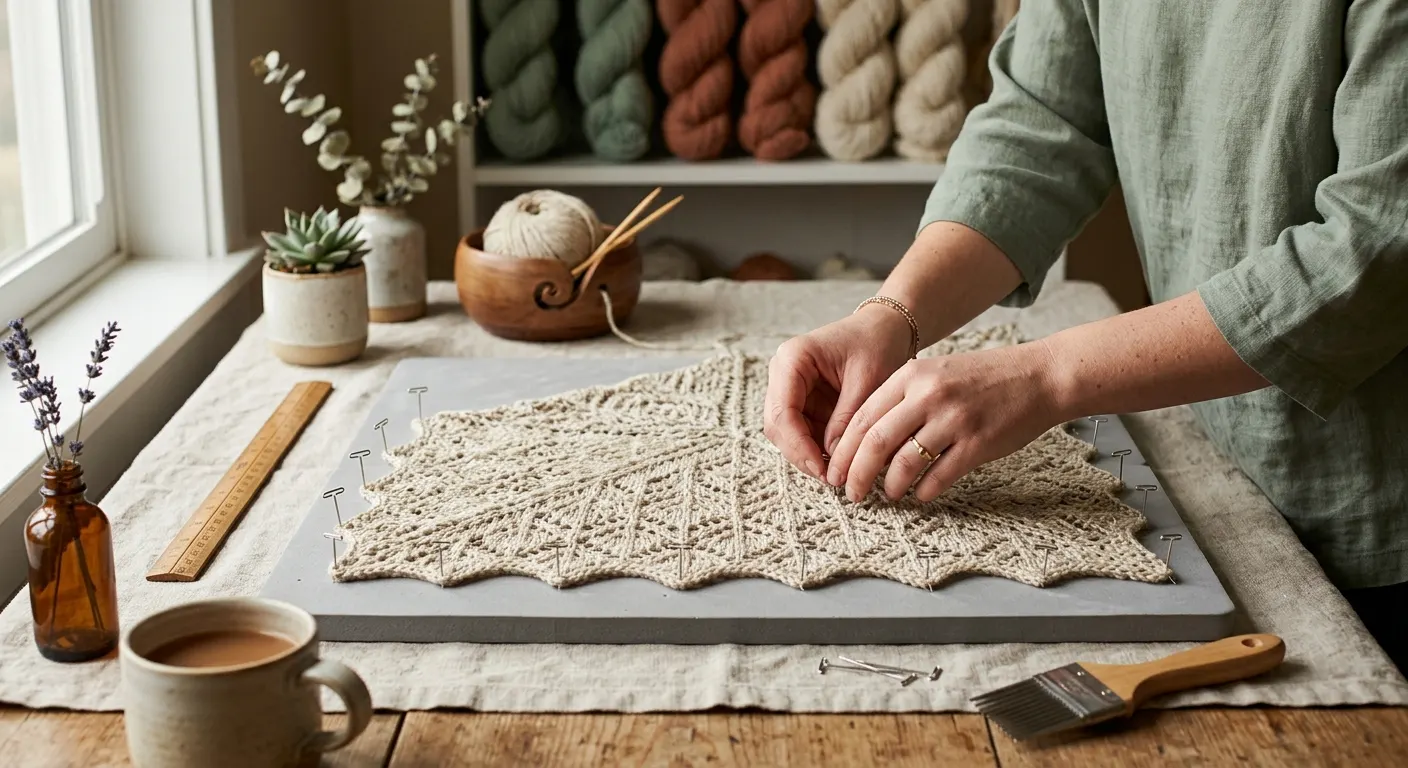
Blocking Knitting: How to Block Every Fiber Type
By FiberCroft . 11 min read . Updated June 2026
Blocking is the step between finishing your last stitch and calling a project done. It evens out stitches, opens lace patterns, sets garment dimensions, and gives amateur knitting the finished look of professional work. Many beginners skip it because they do not know exactly how it works or what equipment they need. This guide explains the three main blocking methods, which fibers suit each one, and what tools make the process faster and more effective, starting with the KnitIQ Extra Thick Blocking Mats (9-Pack with 150 T-Pins) as the most complete entry-point kit.
The short answer
Wet block wool and natural fibers by soaking in cool water with a no-rinse wool wash, squeezing out excess moisture, pinning to foam mats, and allowing to dry flat. Use spray blocking for fibers that need less moisture. Never steam-block acrylic. The KnitIQ Extra Thick Blocking Mats with T-pins included are the best all-in-one kit for blocking at home, with enough surface area for a full adult sweater piece.
This guide contains affiliate links. FiberCroft may earn a commission at no cost to you.
Why blocking matters and what it actually does
A piece of knitting or crochet that comes off the needles looks different from the same piece after blocking. Stitches that looked uneven and lumpy while on the needle even out as the fibers relax. A lace shawl that looks like a crumpled pile of yarn opens into a dramatic, defined pattern when pinned and dried. A sweater front that measures 18 inches off the needles can be gently coaxed to 19 inches to match the pattern dimensions.
The mechanism is different for different fibers. In wool and other protein fibers, moisture breaks the hydrogen bonds between fiber scales, allowing the fiber to relax and reshape. When the piece dries, the bonds reform in the new position and the fabric holds its shape. Acrylic and synthetic fibers have no hydrogen bonds in the same sense, so wet blocking does nothing. Steam can soften synthetic fibers, but the heat threshold is low and overheating permanently changes the texture in a way that cannot be reversed.
Blocking is optional for quick projects in thick yarn where gauge does not matter. It is not optional for lace, garments where fit matters, or anything where stitch definition is part of the visual design.
Wet blocking: the most effective method for wool
Fill a basin or sink with cool or lukewarm water and add a small amount of wool wash. The Eucalan No-Rinse Wool Wash (Lavender) is a no-rinse concentrate, so you skip the rinse step entirely: add a capful to the water, submerge the piece fully, and allow it to soak for 15 to 30 minutes until it is thoroughly saturated. The conditioner in the wash also softens the fiber and reduces scratchiness in yarns that felt rough off the skeins.
After soaking, gently lift the piece from the water without wringing. Wringing wool causes felting. Instead, fold the piece gently and press it against the side of the basin to squeeze out excess water. Then roll it in a clean towel and press again. The piece will be damp but not dripping.
Lay it on the KnitIQ Extra Thick Blocking Mats (9-Pack with 150 T-Pins) and pin it to the dimensions in your pattern. The dual-sided grid helps you keep edges straight and corners square without measuring constantly. T-pins hold the edge securely in the foam without pulling through. Allow to dry completely before removing pins, which takes 24 to 48 hours depending on fiber weight and room humidity.

Eucalan No-Rinse Wool Wash (Lavender)
A no-rinse, plant-derived wool wash concentrate that cleans, conditions, and softens natural fiber. A small amount per blocking soak keeps handknits fresh and supple.
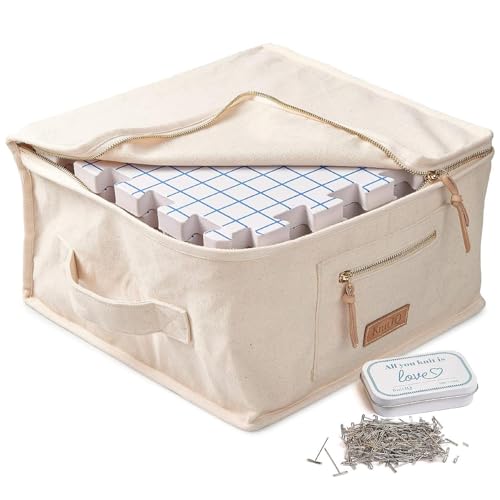
KnitIQ Extra Thick Blocking Mats (9-Pack with 150 T-Pins)
Nine interlocking extra-thick foam boards with dual centimeter and inch grids, plus 150 T-pins and a storage bag. The most complete blocking mat kit available at an accessible price.
Blocking wires for lace and straight edges
For shawls, lace scarves, and anything where a straight edge is part of the design, blocking wires make an enormous difference in speed and result quality. You thread a flexible stainless-steel wire through the edge of the piece before pinning, and the wire holds the entire edge in a continuous straight line. Instead of placing a pin every half-inch along a shawl edge, you thread the wire in a few seconds and use four or five pins to anchor the wire itself.
The WoolWorks Stainless Steel Blocking Wires Set includes multiple wire lengths that suit different shawl sizes. The stainless steel does not rust when used repeatedly with wet fiber. If you have never used blocking wires, the first time you block a lace shawl with them instead of pins alone is a revelation in how much faster and cleaner the process becomes.
For shaped pieces like sweater fronts and sleeves where edges are not straight, pins without wires work better. Use the wires only where you want a perfectly straight, uninterrupted line.

WoolWorks Stainless Steel Blocking Wires Set
A set of flexible stainless steel blocking wires that thread through shawl edges to hold them perfectly straight without using dozens of pins. Indispensable for lace blocking.
Expanding your blocking surface with extension boards
The KnitIQ Extra Thick Blocking Mats (9-Pack with 150 T-Pins) connects into a surface sufficient for most individual project pieces. For large lace shawls, adult sweater backs, or blocking multiple pieces simultaneously, more area is helpful. The KnitIQ Blocking Mats Extension Kit (3 Extra Boards) adds three additional boards that interlock perfectly with the base set, expanding the surface without any compatibility issues.
Storage is the main trade-off for a large blocking setup. Twelve boards take more room than nine. Many knitters store the full set under a bed or behind a sofa, which works well since blocking sessions are typically a few times a week at most rather than constant.
KnitIQ Extra Thick Blocking Mats (9-Pack with 150 T-Pins)
Nine interlocking extra-thick foam boards with dual centimeter and inch grids, plus 150 T-pins and a storage bag. The most complete blocking mat kit available at an accessible price.
KnitIQ Blocking Mats Extension Kit (3 Extra Boards)
Three additional interlocking foam boards that expand an existing KnitIQ set for blocking very large shawls or multiple project pieces simultaneously.
Spray blocking and steam blocking
Spray blocking involves misting a piece with water from a spray bottle and pinning it without full soaking. It suits fibers that benefit from some moisture but not a full soak, including cotton blends and some bamboo yarns. It is also useful for a quick refresh of a finished project that has lost its blocked shape during wear.
Steam blocking uses a steam iron or steamer held above the work. You do not touch the iron to the fiber; you hover it an inch or two above the surface and allow the steam to penetrate. Steam blocking works well on wool and some plant fibers. It is the fastest method for even-stitching stockinette pieces. Do not steam-block acrylic yarn. The heat can cause permanent texture changes that make the fabric feel stiff or plasticky. Always test a swatch of acrylic first if you are unsure.
Featured in this guide
KnitIQ Extra Thick Blocking Mats (9-Pack with 150 T-Pins)
Nine interlocking extra-thick foam boards with dual centimeter and inch grids, plus 150 T-pins and a storage bag. The most complete blocking mat kit available at an accessible price.
KnitIQ Blocking Mats Extension Kit (3 Extra Boards)
Three additional interlocking foam boards that expand an existing KnitIQ set for blocking very large shawls or multiple project pieces simultaneously.
WoolWorks Stainless Steel Blocking Wires Set
A set of flexible stainless steel blocking wires that thread through shawl edges to hold them perfectly straight without using dozens of pins. Indispensable for lace blocking.
Eucalan No-Rinse Wool Wash (Lavender)
A no-rinse, plant-derived wool wash concentrate that cleans, conditions, and softens natural fiber. A small amount per blocking soak keeps handknits fresh and supple.
Related roundups
FAQ
Frequently asked questions
How do I know if my yarn can be wet blocked?+
Check the yarn label first. Wool, alpaca, silk, cashmere, and most other protein fibers wet-block well. Cotton and linen also wet-block. Acrylic and most synthetics do not change shape with wet blocking because the fiber structure does not respond to moisture the same way. If the label shows a hand-wash symbol and a flat-dry symbol, the fiber is a candidate for wet blocking.
What T-pins are best for blocking?+
Rustproof stainless or nickel-plated T-pins are the right choice. Standard steel pins will rust when repeatedly used with wet fiber and leave rust marks on light-colored yarn. The T shape distributes the pin load across the foam better than a round head and lets you press the pin in firmly at an angle to grip the fiber edge without pulling through. The KnitIQ set includes 150 T-pins that are the right size and material for the included foam boards.
How long does blocking take to dry?+
For most wet-blocked pieces, drying takes 24 to 48 hours at room temperature. Heavy woolen pieces or items blocked in a humid room may take longer. Using a fan to circulate air speeds drying without applying heat. Do not put pinned pieces in a dryer or near a heater. Remove pins only after the piece is fully dry, not just surface dry, because fiber that is still damp inside can relax back toward its unblocked shape.